Start typing to search this publication.
Brandon Donnelly logo Brandon Donnelly
Open menu
Brandon Donnelly logo

Subscribe to Brandon Donnelly

Get new posts delivered straight to your inbox.

Brandon Donnelly — Daily insights for city builders. Published since 2013 by Toronto-based real estate developer Brandon Donnelly. — Page 7

Cover image for Living at 2,100 metres

Living at 2,100 metres

  • Park city / utah
  • Photography
  • Snowboarding

Parkview Mountain House is situated at around 2,100 m in elevation in Park City, Utah. To put this into context, Denver is the “Mile-High City” which means it’s only 1,609 m in elevation (or 5,280 feet because, for whatever odd reason, that’s how many feet are in a mile — and, yes, the US should adopt the metric system already).

There are only so many major cities that sit in or above this bracket. Mexico City is about 2,240 m, Bogotá, Colombia is about 2,620 m, and La Paz, Bolivia is about 3,640 m, which gives it the title of the highest capital city.

But I digress. The neat thing about where PMH is located in Park City is that you can walk about 10 minutes up the street and you’re at the Parkview Trailhead with easy access to hikes ranging from 45 minutes to a few hours. This is such a novelty to me.
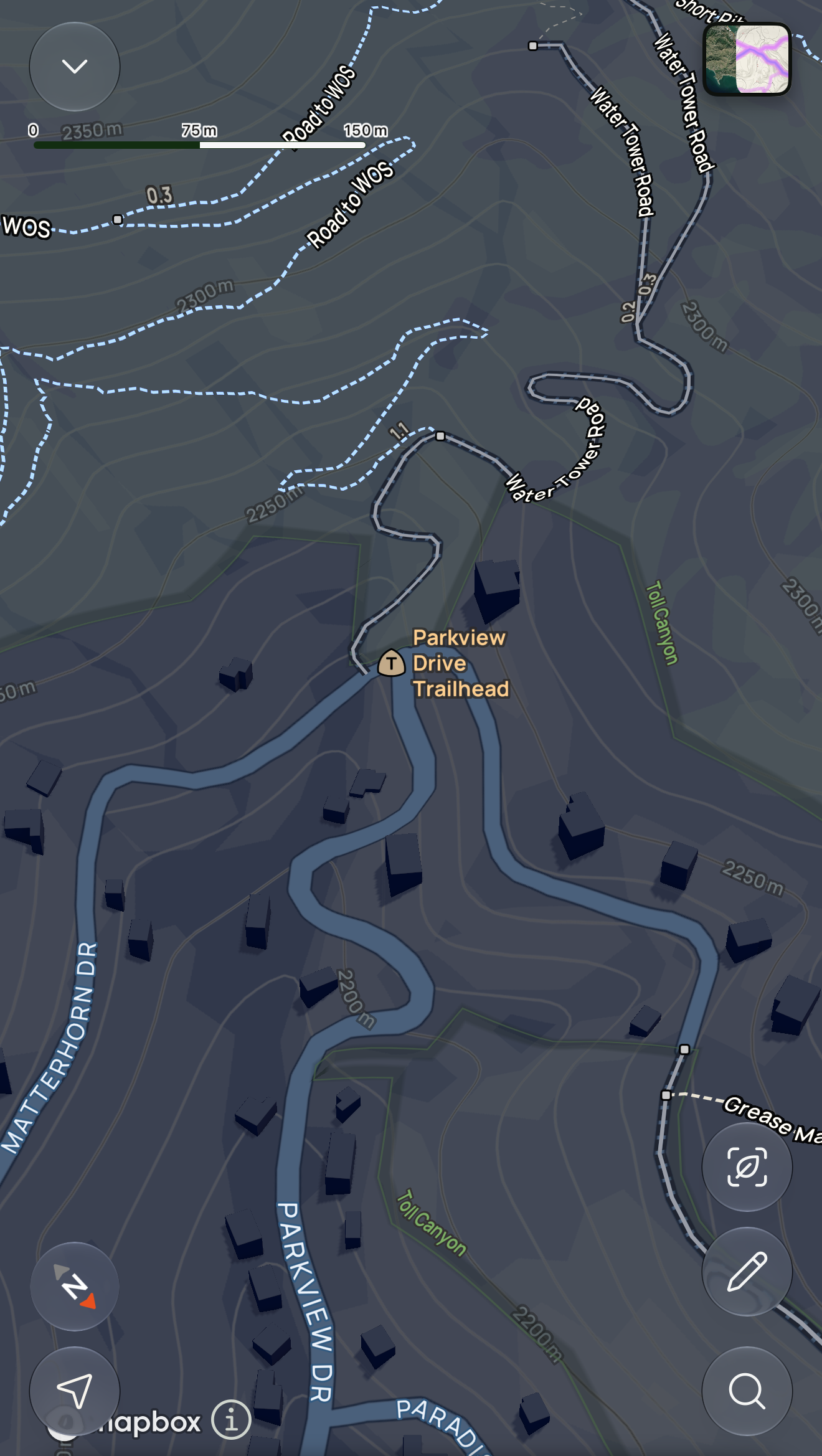
I’ve never done it, but lots of backcountry skiers and boarders also skin up in the winter to get in powder turns away from the crowds. One day I will try this. There’s barely any parking here, though, so walking from the house is a nice feature.

Here’s a list of the best trails in the area via AllTrails.
Cover image for The built-in bias of city hall data

The built-in bias of city hall data

  • Planning
  • Community engagement
  • Data centres

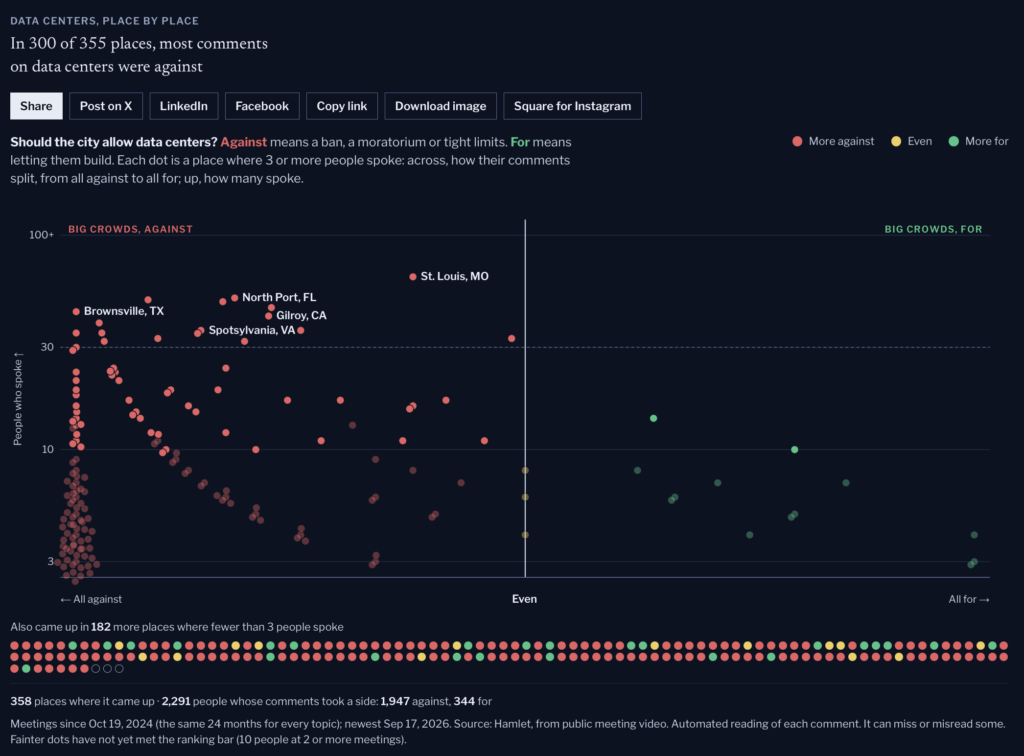
MyHamlet.com is a fascinating public records platform that monitors, transcribes, and indexes municipal and county government meetings across the US. Its primary job is to take unstructured and fragmented public data (such as meeting minutes and video recordings of council meetings) and turn it into searchable data for advocacy groups, real estate developers, and others.

The site covers over 2,400 cities and counties, and it allows you to easily uncover hard-to-ascertain data like public opinion on data centres:

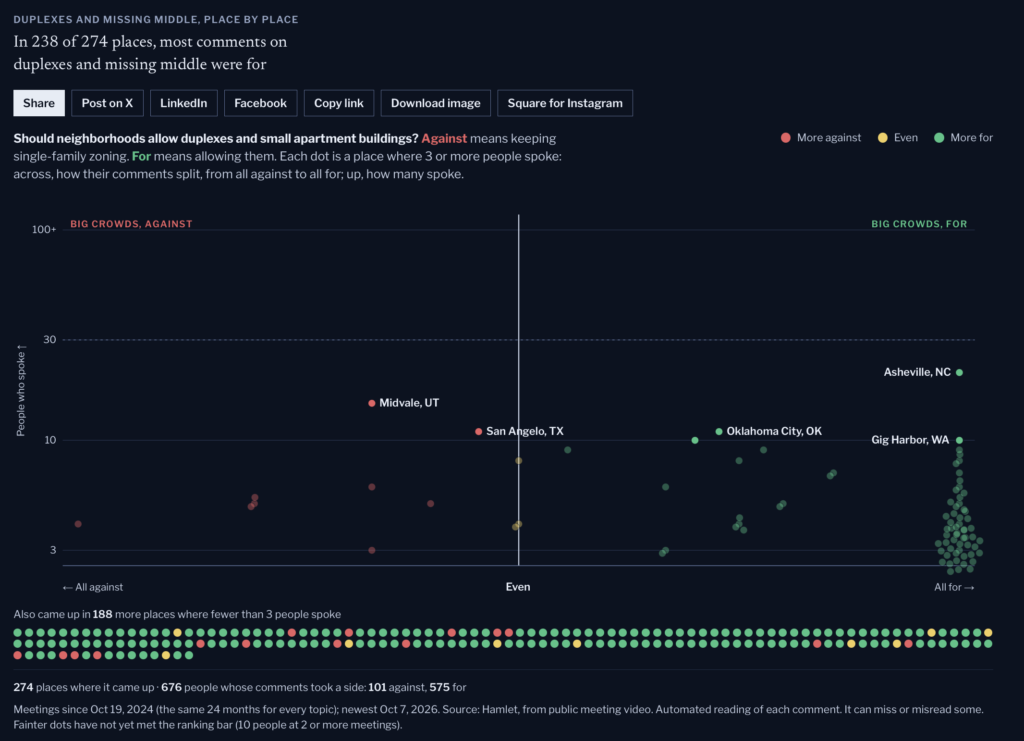
Okay, you knew this already. But their other rankings include topics ranging from pickleball courts to missing middle housing (both of which seem to have broad support):

While it’s a great way to surface data that most people wouldn’t care to read otherwise, it naturally inherits the same structural bias of the public meeting format. In other words, the people who tend to engage and attend these meetings typically have both the time on their hands and a bone to pick. There need to be better ways to capture an accurate cross-section of public opinion.

London pedestrianized Oxford Street

  • London
  • Urbanism
  • Kensington market

Oxford Street now pic.twitter.com/Sa3JG8SFdS

— Tom Edwards (@BBCTomEdwards) October 26, 2026

London did it: they pedestrianized Oxford Street. The section between Orchard Street and Great Portland Street is now closed to all traffic, including buses, cars, taxis, bikes, and scooters. And already, it looks like this. (For reference, here’s the post I wrote at the beginning of the year when London first approved the plans.)

Pedestrianization is a much-debated topic in urbanist circles. Toronto has, for instance, very few pedestrian-only streets and has debated pedestrianizing Kensington Market for as long as I can remember. But with London and Oxford, the street was widely acknowledged to be in decline and that created the political consensus to do something.

I can’t wait to see the data once it becomes available, but even before then, here is my prediction.

Pedestrianizing Oxford will prove to be an economic and urban success for the city. Other cities will then look to London and say “See, we can do that too!” But the critics will respond with “Yeah, but we’re not Oxford Street in London. We simply don’t have the infrastructure. Where will people park? The businesses will suffer!”

And they will be right, though not for the reasons they think: Not every city is willing to be bold.

Subscribe to Brandon Donnelly

Daily insights for city builders. Published since 2013 by Toronto-based real estate developer Brandon Donnelly.