
 decentralised
Could Solana's Major Upgrade Trigger a 2026 Altcoin Season?
Alpenglow aims to cut transaction latency by 100x, matching Google & Visa speeds, possibly setting the stage for TradFi adoption and a 2026 altcoin season.
 decentralised
Maduro Captured: How Crypto Kept Venezuela’s Oil Trade Alive
Amid years of aggressive US sanctions on Venezuela, cryptocurrency has been used to facilitate 80% of Maduro's oil trade as a fast & secure alternative.
 decentralised
UK Government to Start Tracking All Crypto Transactions
The UK government will begin tracking all crypto transactions in a major expansion of HMRC's surveillance powers.
Exploring policy, narratives & culture in crypto.
Support decentralised
 decentralised
Why Wall Street Is Betting on Ripple & XRP

Subscribe to decentralised
Support decentralised
decentralisedWhy Wall Street Is Betting on Ripple & XRP
decentralisedCould Solana's Major Upgrade Trigger a 2026 Altcoin Season?
Alpenglow aims to cut transaction latency by 100x, matching Google & Visa speeds, possibly setting the stage for TradFi adoption and a 2026 altcoin season.
decentralisedMaduro Captured: How Crypto Kept Venezuela’s Oil Trade Alive
Amid years of aggressive US sanctions on Venezuela, cryptocurrency has been used to facilitate 80% of Maduro's oil trade as a fast & secure alternative.
decentralisedUK Government to Start Tracking All Crypto Transactions
The UK government will begin tracking all crypto transactions in a major expansion of HMRC's surveillance powers.
As the U.S. Federal Reserve consecutively cut interest rates and geopolitical tensions rise with the U.S. dollar at risk of losing its global dominance, riskier assets including cryptocurrencies become more attractive to investors.
One cryptocurrency to keep an eye on is XRP and here's why.
Ripple, often associated with XRP, is a financial technology company that provides blockchain-based solutions to businesses and has created a network and protocol that uses the cryptocurrency XRP and the XRP Ledger, similar to the SWIFT system used by banks.
In early November of 2025, Ripple raised $500 million in an investment valuing the private company at $40 billion, according to Reuters.
The funding round was led by funds managed by affiliates of Fortress Investment Group, Citadel Securities, Pantera Capital, Galaxy Digital, Brevan Howard, and Marshall Wace, according to CNBC.
"Two of the funds that put in money assessed that at least 90% of the company’s net asset value derived from a crypto token called XRP," according to Bloomberg.
Citadel Securities is one of the world's largest market makers, handling "about 40% of all US retail trading volume" and generating billions of dollars in revenue each year, as per Bloomberg.
Ripple attracting investment from a market-maker like Citadel may tell you all that you need to know about the long-term confidence institutions hold in the blockchain-based fintech.

Because in December of 2024, Ripple launched their own USD-denominated stablecoin RLUSD.
The stablecoin was designed to integrate into Ripple's financial infrastructure bridging blockchain technology while receiving the regulatory green light for institutional adoption.
The CEO of Ripple, Brad Garlinghouse, posted a picture on X with the president of the United States Donald Trump in January 2025, just a month before the GENIUS act was introduced in the U.S. senate.
The GENIUS act, a stablecoin regulatory framework requiring 1:1 USD reserves, laid the foundation for traditional financial institutions to adopt "stablecoins such as Ripple USD (RLUSD) for treasury payments and collateral management," as per Reuters.
"RLUSD is fully backed by U.S. dollar deposits, U.S. government bonds and cash equivalents," as per Coindesk.
The framework allows for stablecoins like RLUSD, and by association Ripple, to offer its services to the traditional financial industry, a key catalyst for institutional adoption.
For instance, in November of 2025, Ripple announced a partnership with Mastercard and Gemini to explore the use of RLUSD to power blockchain-based credit card settlements.
"We’re using our global payments network to bring regulated, open-loop stablecoin payments into the financial mainstream" said Sherri Haymond, Global Head of Digital Commercialization at Mastercard.
The GENIUS act is part of Trump's larger initiative of garnering short-term demand for U.S. treasuries as the U.S. dollar's global dominance weakens, while also setting the stage for American internet-native money as the financial world moves digital.
"This investment reflects both Ripple's incredible momentum, and further validation of the market opportunity we're aggressively pursuing," said Ripple CEO Brad Garlinghouse.
As regulatory clarity and institutional adoption for Ripple grows, both retail and institutional investors seek ways to invest in the company without exposing themselves to the volatility of crypto.
This is where financial products such as exchange-traded funds (ETFs) come into play, an opportunity for asset managers to provide investors with exposure to crypto while still under the regulatory oversight of the SEC.
On December 22nd, XRP ETFs recorded $43 milion in total net inflows for the day with $1.24B in total net inflows by all U.S. XRP spot ETFs, according to SoSoValue.

"XRP ETFs logged 21–30 straight days of net inflows while many Bitcoin and Ethereum ETFs saw money leave," as reported by 99Bitcoins.
In November 2025, four asset managers launched their XRP spot ETFs: Canary, Bitwise, Grayscale and Franklin Templeton.
Here is a list of all the live U.S. listed XRP ETFs:

David Mann, Head of ETF Product and Capital Markets at Franklin Templeton said XRP plays a "foundational role in global settlement infrastructure," as per Coindesk.
The worlds largest asset manager, BlackRock, is yet to announce its launch of an XRP ETF though their Bitcoin ETF, iShares Bitcoin Trust, is the largest crypto ETF in the U.S. with $66 billion worth of assets under management (AUM).

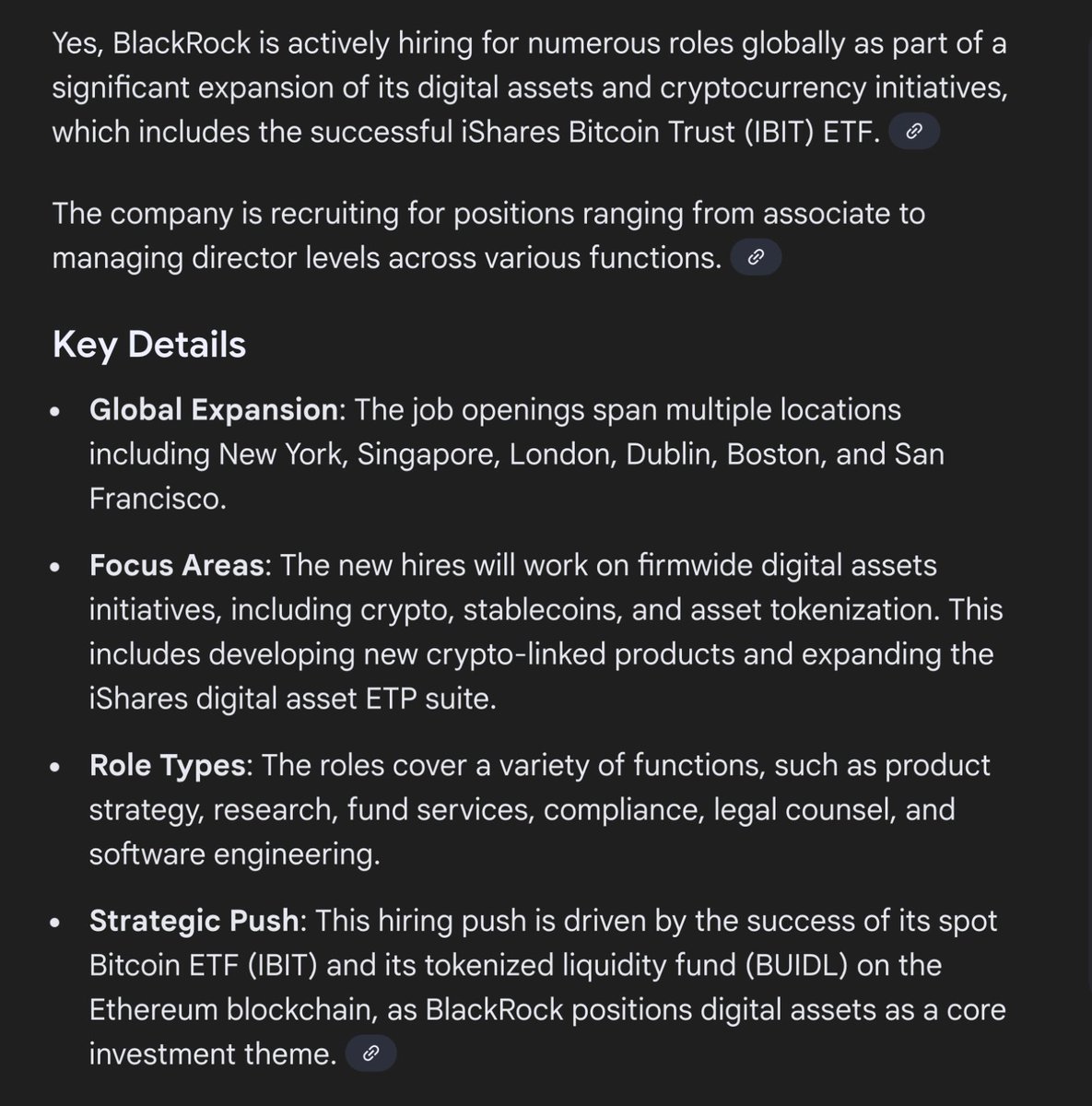
"Blackrock is aggressively staffing up its crypto ETF division to expand it product suite right now." said crypto commentator Chad Steingraber on X.
"They will launch their XRP, SOL ETF’s in 2026 as the next set."
With the rapid rollout of four XRP ETFs in November, growing institutional adoption of XRP and its technology, large Wall Street investment, and the regulatory green light from the government, Ripple seems well-positioned to be a long-term player in the new-age financial services industry and XRP stands to benefit.
Thank you for reading.
This article is strictly for informational purposes only and must not be taken as financial advice. Please do your own research.
As the U.S. Federal Reserve consecutively cut interest rates and geopolitical tensions rise with the U.S. dollar at risk of losing its global dominance, riskier assets including cryptocurrencies become more attractive to investors.
One cryptocurrency to keep an eye on is XRP and here's why.
Ripple, often associated with XRP, is a financial technology company that provides blockchain-based solutions to businesses and has created a network and protocol that uses the cryptocurrency XRP and the XRP Ledger, similar to the SWIFT system used by banks.
In early November of 2025, Ripple raised $500 million in an investment valuing the private company at $40 billion, according to Reuters.
The funding round was led by funds managed by affiliates of Fortress Investment Group, Citadel Securities, Pantera Capital, Galaxy Digital, Brevan Howard, and Marshall Wace, according to CNBC.
"Two of the funds that put in money assessed that at least 90% of the company’s net asset value derived from a crypto token called XRP," according to Bloomberg.
Citadel Securities is one of the world's largest market makers, handling "about 40% of all US retail trading volume" and generating billions of dollars in revenue each year, as per Bloomberg.
Ripple attracting investment from a market-maker like Citadel may tell you all that you need to know about the long-term confidence institutions hold in the blockchain-based fintech.
Because in December of 2024, Ripple launched their own USD-denominated stablecoin RLUSD.
The stablecoin was designed to integrate into Ripple's financial infrastructure bridging blockchain technology while receiving the regulatory green light for institutional adoption.
The CEO of Ripple, Brad Garlinghouse, posted a picture on X with the president of the United States Donald Trump in January 2025, just a month before the GENIUS act was introduced in the U.S. senate.
The GENIUS act, a stablecoin regulatory framework requiring 1:1 USD reserves, laid the foundation for traditional financial institutions to adopt "stablecoins such as Ripple USD (RLUSD) for treasury payments and collateral management," as per Reuters.
"RLUSD is fully backed by U.S. dollar deposits, U.S. government bonds and cash equivalents," as per Coindesk.
The framework allows for stablecoins like RLUSD, and by association Ripple, to offer its services to the traditional financial industry, a key catalyst for institutional adoption.
For instance, in November of 2025, Ripple announced a partnership with Mastercard and Gemini to explore the use of RLUSD to power blockchain-based credit card settlements.
"We’re using our global payments network to bring regulated, open-loop stablecoin payments into the financial mainstream" said Sherri Haymond, Global Head of Digital Commercialization at Mastercard.
The GENIUS act is part of Trump's larger initiative of garnering short-term demand for U.S. treasuries as the U.S. dollar's global dominance weakens, while also setting the stage for American internet-native money as the financial world moves digital.
"This investment reflects both Ripple's incredible momentum, and further validation of the market opportunity we're aggressively pursuing," said Ripple CEO Brad Garlinghouse.
As regulatory clarity and institutional adoption for Ripple grows, both retail and institutional investors seek ways to invest in the company without exposing themselves to the volatility of crypto.
This is where financial products such as exchange-traded funds (ETFs) come into play, an opportunity for asset managers to provide investors with exposure to crypto while still under the regulatory oversight of the SEC.
On December 22nd, XRP ETFs recorded $43 milion in total net inflows for the day with $1.24B in total net inflows by all U.S. XRP spot ETFs, according to SoSoValue.
"XRP ETFs logged 21–30 straight days of net inflows while many Bitcoin and Ethereum ETFs saw money leave," as reported by 99Bitcoins.
In November 2025, four asset managers launched their XRP spot ETFs: Canary, Bitwise, Grayscale and Franklin Templeton.
Here is a list of all the live U.S. listed XRP ETFs:
David Mann, Head of ETF Product and Capital Markets at Franklin Templeton said XRP plays a "foundational role in global settlement infrastructure," as per Coindesk.
The worlds largest asset manager, BlackRock, is yet to announce its launch of an XRP ETF though their Bitcoin ETF, iShares Bitcoin Trust, is the largest crypto ETF in the U.S. with $66 billion worth of assets under management (AUM).
"Blackrock is aggressively staffing up its crypto ETF division to expand it product suite right now." said crypto commentator Chad Steingraber on X.
"They will launch their XRP, SOL ETF’s in 2026 as the next set."
With the rapid rollout of four XRP ETFs in November, growing institutional adoption of XRP and its technology, large Wall Street investment, and the regulatory green light from the government, Ripple seems well-positioned to be a long-term player in the new-age financial services industry and XRP stands to benefit.
Thank you for reading.
This article is strictly for informational purposes only and must not be taken as financial advice. Please do your own research.
<100 subscribers
<100 subscribers
Share Dialog
Share Dialog



No activity yet