


2025 was the year Incented stopped being “an idea we were passionate about” and became something we could point to, run live, and trust under pressure.
We started the year with outside validation, spent spring in a shipping frenzy, hit the summer with real users forcing real priorities, and ended the year with two things every platform eventually needs: a clearer philosophy and a bigger surface area (multi-chain, richer programs, deeper workflow).
If there’s one thread that ties the year together, it’s this:
Coordination doesn’t fail because communities don’t care. It fails because the system around them doesn’t make caring legible.
Incented is our attempt to fix that, by making coordination programs easy to run, contributions easy to evaluate, and incentives easy to distribute fairly.
Four Day Funk - Jeff Hopp - Coordinated Creation Cycle 12
The year began with a moment that changed how it felt to show up to work.

 Congratulations to Season 4 Creators! $852,145 awarded to 160 amazing projects.
 1st - @iamsvenh raised $159,726.
 2nd - @ClaudiaBuenoArt raised $119,160.
 3rd - @futuronativo raised $108,021.
↓ Submissions now open for Season 5.
On January 24, we won Artizen Season 4. We got more than funding, we got validation. The kind of external signal that lands in your chest and rewires your week. It wasn’t “good luck, have fun.” It was “we believe this problem matters and we believe you can solve it.”

But belief doesn’t ship. The win didn’t reduce the work. It allowed us to quadruple it. Because once someone else believes, you don’t get to treat the product like a prototype anymore.
Under the hood, Q1 was about turning a concept into a product you can trust. We shipped 394 commits worth of structural work: settlement testing, demo seeding, permissions refinements, UI edge-case cleanup, docs improvements. The kinds of things you only notice when they’re missing.
We also made a small change that ended up being a big one: we renamed “Grants” to “Programs.” It sounds cosmetic until you realize it’s a worldview. Grants are just one use case Incented can improve. Programs are repeatable coordination engines. We weren’t building a payout page. We were building a system communities could run like infrastructure.

On February 23, we launched a new Incented website. It was a line in the sand: no more “coming soon,” no more “we’re working on it.” But a public front door.

Incented Protocol
Human Coordination & Fund allocation Management - Grants, Hackathons, Bounty Programs and more. Incented's permissionless incentivization and coordination protocol and platform makes coordinating...
A few days later, we brought it to ETHDenver. We pitched at the Startup Battle.
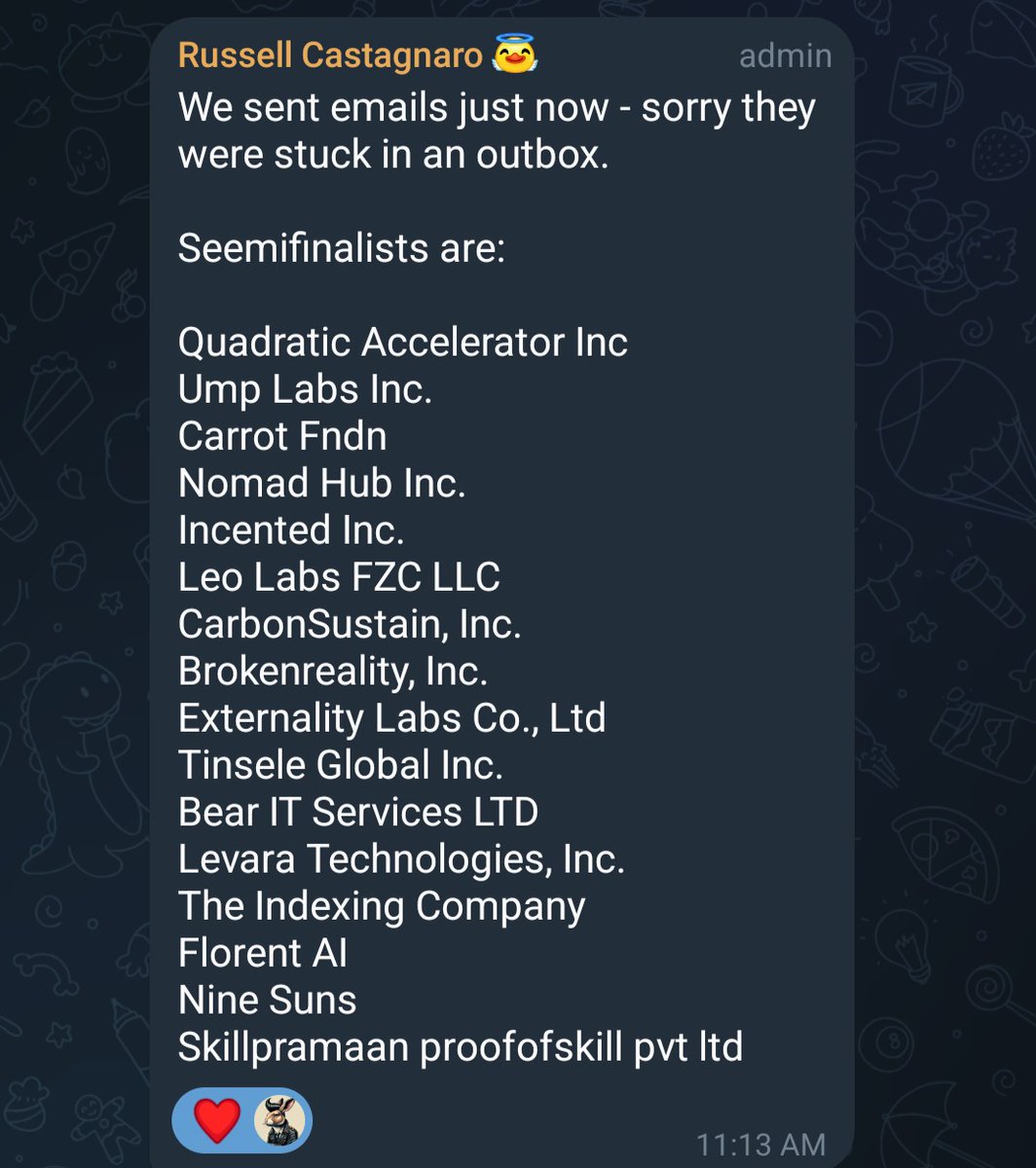
But if we’re being honest, the thing people remembered wasn’t the pitch. It was the swag.
We dropped custom Incented merch. Every single piece hand made by our founder. He even made more at the AirBnB in Denver cuz we ran out.

People loved it!

That week gave us a simple lesson we carried all year: coordination is emotional before it’s technical. People participate in systems that feel alive.


Spring was pure output. May and June were high-velocity months. Q2 became our most intense quarter: 459 commits of expansion and hardening.
From the outside, these months can look like “random product updates.” From the inside, it was the moment we started preparing for people who don’t have patience for alpha vibes: better file handling, upload reliability, onboarding improvements, clearer constraints and limits, more defensive design.
In May, we launched a Social Media Kit in collaboration with with Alana Magazine.
So greatful to work with amazing, value aligned people like the ALANA team
 . And special thanks to @stellaachenbach.

On paper, it’s “assets for creators.” In reality, it was a statement: Incented does not just rewards output. It helps communities make output easier to share, easier to amplify, easier to turn into community signal.
If programs are the coordination engine, distribution is the oxygen. Thanks Stella for helping us put this resource together for our clients.

We leaned deeper into the relationships and community collaboration, including work around Alana Magazine with Stella Achenbach.

Your show of support means the world! We can't wait to climb down the @GetIncented rabbit hole with you


 er. Stella does everything with 110%,

This mattered because Incented’s “market” isn’t a single user type. It’s a loop: organizations running programs, contributors submitting work, communities voting, and everyone needing a shared language of what “good” looks like. Those loops aren’t built by code alone.
We launched the Based Creators Catalyst Program.

 Introducing: The Create Catalyst Fund
@basedcreators are launching an innovative new grant program— and applications are now open!
 Applications open for 2 weeks
 70m $CREATE for applicants
 7m $CREATE for community voters
Apply now → thecreators.com/grant
Real "money", real creators, real stakes. Nine winners. Community voting. Full pipeline:
announcement → submissions → evaluation → settlement.
We’d been building the system. Now we had to run it.
You could feel the tension in the work. Not “will this feature ship?” but “will this hold up when it matters?” That’s the moment a product becomes real.

As an independent artist, I've been building the BizarreBeasts ( $BB
Q3 had fewer commits on the product side. From the outside, that could look like slowing down. From the inside, it was the opposite.
When you’re running a live program, priorities snap into focus. Reliability beats novelty. Observability beats aesthetics. Every edge case becomes personal, because someone’s work is on the line. You start caring less about shipping “more” and more about shipping “right.”
This was the quarter Incented stopped being a place we built and started being a place people flocked to.
On August 15, the Based Creators Catalyst concluded. Creators have cast 110.938.430 $CREATE to vote on the @BasedCreators Catalyst program.
The @BasedCreators - $Create Catalyst winners are HERE!These 9 projects are about to shake up the world of creativity & web3 in the best way possible. Let’s meet the dream teams below


incented.co/details/3e05c3…

The product did what it promised to do: turn a messy, manual process into something structured, auditable, and actually usable.
If you’ve ever run one of these programs manually, you know how rare that is. Submissions scatter. Feedback gets emotional. Rewards become political. Timelines slip. People leave the process feeling confused.
This time, the system held. That was our first true proof of concept.

We didn’t stop shipping. We just started shipping what mattered most to operators.
The Organization Dashboard is live for org admins!One place to:
 Manage your grant programs
 Track Submissions + contributors
 Manage Users, Transactions, ...
No more scattered spreadsheets.
No more DMs to ask who did what.
 This is onchain coordination

We launched and improved an Org Admin Dashboard, which made running programs less like juggling knives and more like having controls.

We also shipped improved voting, because voting is the most important element. It’s the core governance mechanism that determines whether a program feels fair.
New Incented Voting Update just dropped:You can now vote multiple times on a project.
More carrots (or $CREATE) = more conviction.
 You can change your vote from FOR
  AGAINST
 You can only add more weight — no rage unstakes.
Think before you bet the farm

This was the meta-lesson of Q3: if you want coordination to scale, you have to make the operator experience feel calm.
In October, we made a decision that shaped the rest of the year: we started dogfooding Incented publicly.

We launched Coordinated Creation, our way of building in public and using our own product to coordinate a creative community.
 30 cycles
 120 days
A continuous rhythm of creativity:
2 days to create → 2 days to vote → repeat.
600 USDC for creators.
1500 $SEEDS for voters.
First cycle goes live in tonight.
Bring your memes, your art, your ideas.
link.incented.co/garden
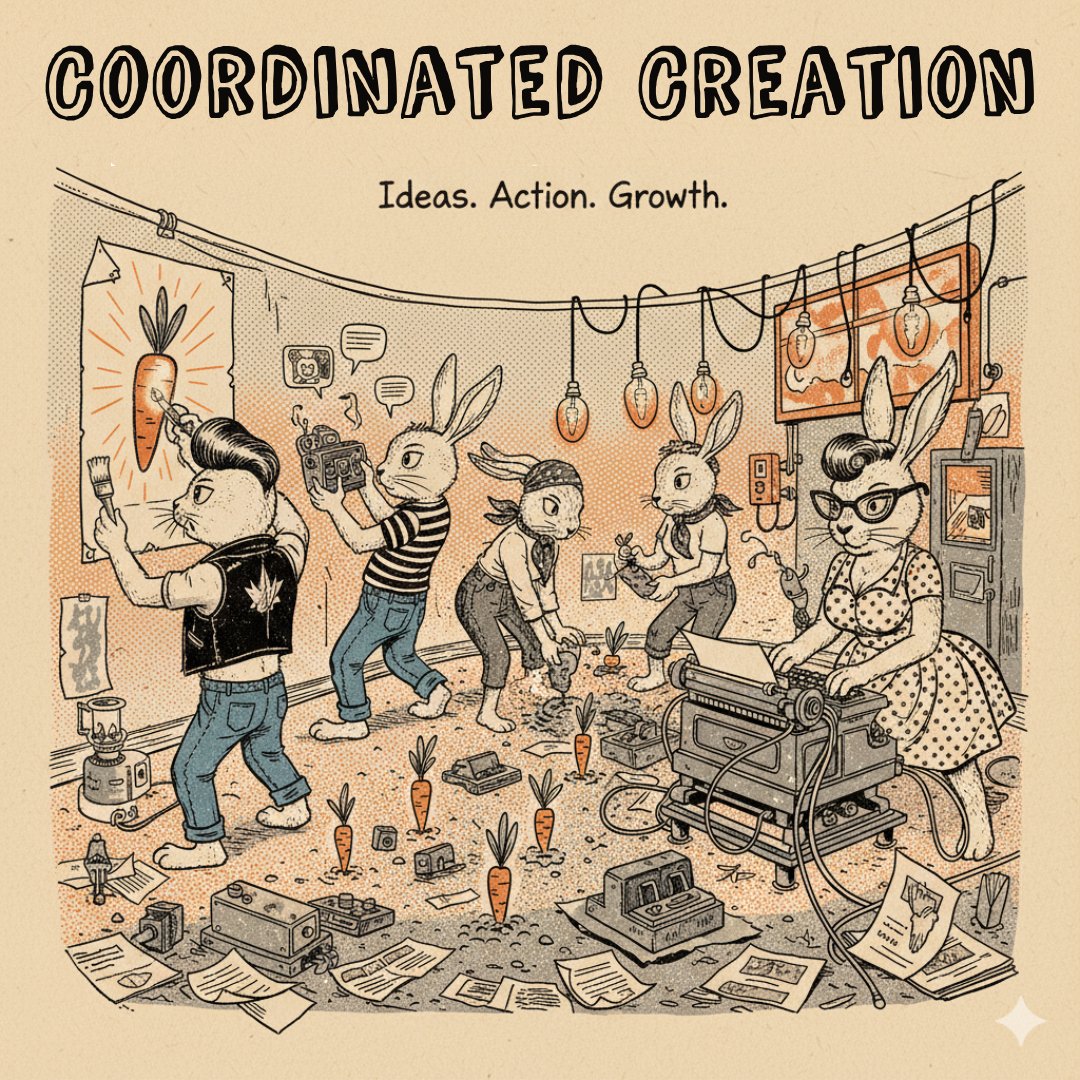
The premise is simple: 4 day cycles, open-ended creative submissions, community signal. If Incented is coordination infrastructure, it should coordinate weird, cultural, joyful things too, not just “professional” work.
And it did / does.
Even before the program finished, the numbers are telling:
70+ submissions | 14 cycles completed | 56 winners already
But the real evidence is the variety:
A movie poster: Submission
A comic strip: Submission
And so much more
Coordinated Creation became our favorite kind of proof: the product didn’t just work, it produced culture.
Early October, we launched our Juicebox project.

This is the starting point for our way of making the next phase possible: programs that can sustain themselves, communities that can fund what they value, and coordination that doesn’t depend on a single sponsor or a single moment.
We also published our SEEDS strategy.
SEEDS are a points system and a governance experiment. Our way to reward participation, attention, and care. A way to make “showing up early” legible. Less about gamifying for its own sake and more about building ownership loops that compound.

Late October was also when we started being more direct about the philosophy behind Incented. Many may have heard our driving mission statement before:
Create a world where everyone can work on whatever they are most passionate about, while being rewarded equitably for their efforts.
We shared a vision pitch and we talked about the IKEA Effect: people care more when they’ve contributed. When they’ve added an egg. When something is partly theirs.
People value things more when they help create them.
In the 1950s, cake mixes failed because they were too easy. --> It felt like cheating.
So companies changed the recipe, now you had to add an egg. Suddenly, bakers felt pride again. The

That’s what Incented is really about. Not just rewarding output. Creating systems where contribution turns into ownership and ownership turns into better signal.
As the philosophy got clearer, the product had to get more expressive as well.
We shipped a new Cycle UI and a Share on X feature to make participation easier and the output more visible.
Just putting on final touches in the UI. Check out the snazzy new cycle selection menu.

We just made it easier for our creators to share their submissions.
We are mere hours away: link.incented.co/garden

Under the hood, 2025 ended with a major platform transformation: rich media support (audio/video/document previews), notification infrastructure (in-app + email + preferences), and admin surfaces for token and chain management.


This is the part that matters if you’re an operator: Incented started feeling less like an app and more like a system you can run for months.
Early December, we launched a new customer program: ZABAL, a content sprint with ZAO DAO.
 Launching Tomorrow
The ZABAL December Content Sprint
Hosted with @thezaodao & @bettercallzaal
“Create the Future. Shape the Culture. Build the Empire.”
December is ignition month, and @thezaodao is turning the entire ZAO ecosystem into a creative battleground.
Creators

Weekly prizes in USDC. Voting powered by $ZAO Respect. Wide-open creative submissions. A perfect showcase of Incented’s flexibility for culture programs and creator ecosystems.
And importantly: this launch marked a broader expansion. We now supported additional chains like Optimism, Arbitrum, etc, and Incented was becoming multi-chain on EVM, not as a marketing line, but as a practical requirement. Communities live where they live. Coordination tools have to meet them there.
ZABAL V1 was a success, so on December 20th, we shipped ZABAL V2.
incented.co/details/37c4ae…
Before we move forward, a quick look back

Sprint 1 results:
15 submissions across 2 cycles
6 winning creators
60 USDC distributed
Culture > noise, every round
Creators showed up. The community voted. Signal emerged.
That’s a subtle milestone: we weren’t just shipping “for customers.” We were iterating with them.
On December 16, we published “The Carrot, the Stick, and the Garden” right here on our Paragraph.
This was the essay people kept asking for. The one that explains why Incented isn’t just another “rewards product.”
Most systems lean on one over index toward the carrot, giving strangers some sort of monetary incentive to join their community. Incented is built around a different premise: signal emerges when people can express belief, not just chase rewards. Vote for what you think is right. Vote against what you think is wrong. Earn for being right. Be lightly penalized for being careless. Not because punishment is the point, but because consequence is part of truthful coordination.

We ended the year with a major release.
Solana support shipped. Major UI updates landed. The platform expanded from Ethereum-only roots into a multi-chain system supporting EVM & Solana.
From the engineering perspective, this wasn’t just “add a chain.” It was a maturity upgrade: chain-agnostic terminology, multisig abstraction, Squads integration, token management, safer CI/CD workflows, and settlement-level fixes that only show up when real programs are running.
The final months of 2025 felt less like sprinting and more like becoming durable.
We like stories, but we also like receipts.
Development
845 total commits
Peak months: February (198), May (170), June (159)
The pattern: Q2 speed, Q3 operations, Q4 strategic expansion
Programs & community
2 new customers (Based Creators, ZABAL)
Coordinated Creation: 70+ submissions, 14 cycles, 56 winners (and still running)
Multi-chain: EVM & Solana
Major milestones
🏆 Won Artizen Season 4
🎤 Pitched at ETHDenver Startup Battle
🌐 Website launch
💰 Juicebox launch
🌱 SEEDS strategy published
Solana support shipped
1) Vibes matter.
ETHDenver taught us that people don’t share what’s “correct.” They share what feels alive.
2) Dogfooding beats roadmaps.
Coordinated Creation taught us more than any planning session could, because it turned product assumptions into real behavior.
3) Multi-chain isn’t optional.
Communities aren’t going to move for your architecture. The coordination layer has to travel.
4) Philosophy scales when product matches it.
“The Carrot, the Stick, and the Garden” wasn’t a marketing piece. It was a compression algorithm for the year. We are eager to build on that.
5) Velocity isn’t progress.
Our lowest-commit quarter was when we proved the system held up under real stakes.
2025 was the year we went from “can this work?” to “how does this scale?”
We shipped multi-chain support. We onboarded our first customers. We ran programs that didn’t fall apart. We built richer media, better notifications, better admin tooling. We learned what it means to operate a coordination system instead of just building one.
But the most important thing we shipped was clarity.
Incented is a coordination layer: a place where belief has weight, where incentives reveal signal, and where communities can align without centralized control.
We don’t build empires. We plant belief. 🌱
And in 2025, we planted a lot of seeds. We cannot wait what 2026 will bring.
Now, go grab a carrot and wait for the fireworks.
Happy new year y'all!