

The future is already here — it's just not evenly distributed

I discovered crypto in 2017. But for the most part, I stayed on the sidelines watching passively as the space evolved. It wasn’t until the summer of 2021 that I really looked.
I still remember the feeling. It felt magical then; setting up a self-custody wallet, swapping on Uniswap, depositing ETH into Aave and taking out a loan, minting my first NFT on Rarible and paying $200 in gas. I found two ideas specifically incredibly powerful; the freedom to build on an open, permission-less network and the fact you held sovereignty over your assets .
Later that year, I quit my job and raised a seed round to start building in crypto full-time. I had spent endless hours and nights diving deep into trenches and had this thesis that DeFi was going to change the world. But we need to simplify the UX to make it usable for normal people.
Today, I think crypto adoption isn’t blocked by UX alone.. It is lack of useful products. We keep comparing current state of crypto with early days of Internet. But we miss an important detail. Even when the internet was slow and clunky, it was still growing fast because it was obviously useful.
The first product we built was Brew Money - a simple app that helped you earn yield on your crypto through DeFi.
This was peak bull market. Bitcoin had hit new highs. Millions of people across the world parked billions of dollars worth crypto in centralized platforms like BlockFi, Celsius, and more to earn yield.
These platforms were opaque. The yields were attractive, but the users were not aware of the risks involved. Our belief was that DeFi offered a safer, more transparent alternative. *
We were directionally right, but not entirely. Billions are lost to DeFi hacks and exploits. The difference is the risks are visible and onchain.

We launched the Private Beta in Feb, 2022. We had built an iOS app that was dead simple to use. A user could in matter of taps move funds from their bank account into an Aave USDC pool and start earning yield. And we did all of this while keeping the app non-custodial.
The big challenge was onboarding. Fiat-to-crypto remains one of the hardest parts of the stack. We spent the next few months improving the onramp experience with our partner, adding more protocols onto the app, and ironing out early product quirks. We also built something really cool where people could move their funds between protocols in a matter of taps.
May, 2022: Tera Luna happened.
US Terra was an algorithmic stable coin that maintained its peg backed by the LUNA token . At its peak, the market cap of LUNA and UST was $40 Billion. It all crashed to 0 in a span of 3 days.
At that point we had a small number of users testing the app on a Beta Testflight Version and few thousands on the waitlist. We were working towards launching the app on App Store. But the world had changed. I just did not realize it back then.
I was looking back at the deck I was using to raise a round then. I had a slide on the competitive landscape with around 8 competitors. 6 of them don't exist any more. 1 has pivoted and still trying to find PMF. 1 survived but has shifted focus towards serving institutions. (which I think was a very smart move)
The next few months were brutal. A series of CeFi platforms including BlockFi and Celsius filed for bankruptcy. Growth stalled. We were having a hard time converting people even on our waitlist.
Then November came. FTX collapsed. What was supposed to be one of the shining stars of the cycle filed for bankruptcy.
I ignored what was happening in the market and we kept grinding.
In December, we launched publicly on Product Hunt. We did everything “right.” The app was pixel-perfect. The tagline "Earn with self-custody" felt earned.
Brew finished #3 Product of the Day. It felt good.

However, we added single-digit new users.
It was clear that what we had was not working or the market for it didn't exist anymore.
I believed a well-crafted product would find its users. Our underlying thesis about the risks Ce-Fi entailed had come true. What I hadn't internalized though was markets don't care about your craft and beliefs during a macro shift.
December 2022 was a dark. ChatGPT had just launched, and many crypto builders I knew pivoted to AI. Some did well too.
We had a bunch of ideas, but they were vague and we didn’t have a clear next step. A CRM for DeFi protocols. A Uniswap for staked assets. A full-fledged EVM wallet, because we hated every wallet back then. Some of them were good ideas, but I couldn’t build conviction. The common thread was a decision to focus only on crypto natives. With the bear market setting in, it felt like only the believers would remain.
This wasn't wrong. What I underestimated though was how much we still had to learn. Brew had been built for a crypto-adjacent audience, and by going deeper into crypto native users, we were stepping into an entirely new world.
I was going through my monthly updates and this was the note I sent across on Dec, 2022.
We think a product like Brew that helps users earn yield on their crypto with self custody is something that is going to be difficult to grow in current market conditions. We remain bullish on crypto overall. Uniswap is still seeing 130K new traders every month, Lido is growing 10% month on month and will probably grow even faster once the Shanghai upgrade goes live in March, and about 300K consumers still buy NFTs on Opensea every month.
Even in the midst of what felt like a start of a long crypto winter, I was intrigued by what the dune dashboard for Opensea showed me. While trying to find out a space that still had significant user activity, I chose NFTs, probably right at the top.
Opensea was the go to NFT marketplace, Twitter had launched NFT Profile pics (the cool pentagon container), and Instagram allowed NFT posts back then. The thing that felt a bit weird was for a visual artwork, the primary mode of discovery was crypto twitter.
Our hypothesis was that a visually native social platform could become the discovery layer for NFTs. I had just joined Farcaster then. I shared a Figma prototype, dwr recasted it, and the responses felt encouraging.

This was February 9, 2023. Two weeks later we shipped an MVP as an iOS App on Testflight. I enthusiastically casted about it. I got zero response.
Nobody installed the app. Nobody replied. Nobody even liked the cast.

At this point, farcaster was a tiny tiny network. It was just a bunch of people who hanged out together online and dwr was still manually onboarding users.
It was a little perplexing considering the enthusiasm we had received two weeks earlier. I took it as a sign that this was one of those things that people say they want when in reality it is an optional vitamin supplement for their life. Also looking back today, I feel it is entirely possible that most people took me for a sketchy crypto hacker out to steal their private keys. (I was a new user with few frens)
Somewhere between mid-Feb and end of Match, we stumbled upon an interesting little corner of Crypto - the crypto art space. NFTs had for the first time enabled digital visual artists to monetize their creations.

An excerpt from a memo I wrote back then on Crypto Art and Open Editions.
The State of NFT Market
The NFT market cap is estimated at $11-15B, with Crypto Art accounting for 10%. Although not fully representative, Opensea and Blur's secondary sales show signs of recovery with weekly trading volumes at $750M, 50% of its peak in 2022. Amidst the slowdown though, a new phenomenon of Open , Timed , and Limited Edition NFTs have seen explosive growth in the last 6 months.Manifold, a no code tool that allows creators to release open edition drops has seen a growth of 200% to 300% month over month. ~5K artists used Manifold to launch editions in January up from ~2900 in December. (February has been a flat month though) e.g. You can see a timed edition by Amber Vittoria here. She made close to $150K last year from different kinds of editions.
Editions enable collectors to get exposure to artist’s work at a lower price point. The tradeoff artists make is that editions typically will have lower price appreciation. In return they get access to a larger collector base, some of whom can level up to higher price points 1/1 in the future.
Mehul wrote a series of scripts and Dune queries to generate detailed reports for artists. They took hours to put together and we DMed them to artists we believed would find them useful.

I made a classic mistake highlighted in the book The Mom Test: I confused polite encouragement with real demand for something people actually want.

The next month, we again generated a bunch of reports and shared them across. We would get public shoutouts, rave reviews on these reports, people were seeing insights and learning things about their work and collectors they had never known. But there was no inclination to pay.
One thing was clear to us. Just showing insights were not enough. We needed to offer something that could have a tangible impact in their lives.
We got the idea of a web3 patreon from a program that Sabet had run. He launched a economically priced open edition called X-Ray. Holders would get to mint a free artwork every month for the next 12 months. Over 800 people minted XRay & in under 3 months, it has already generated a secondary volume of 22 ETH.
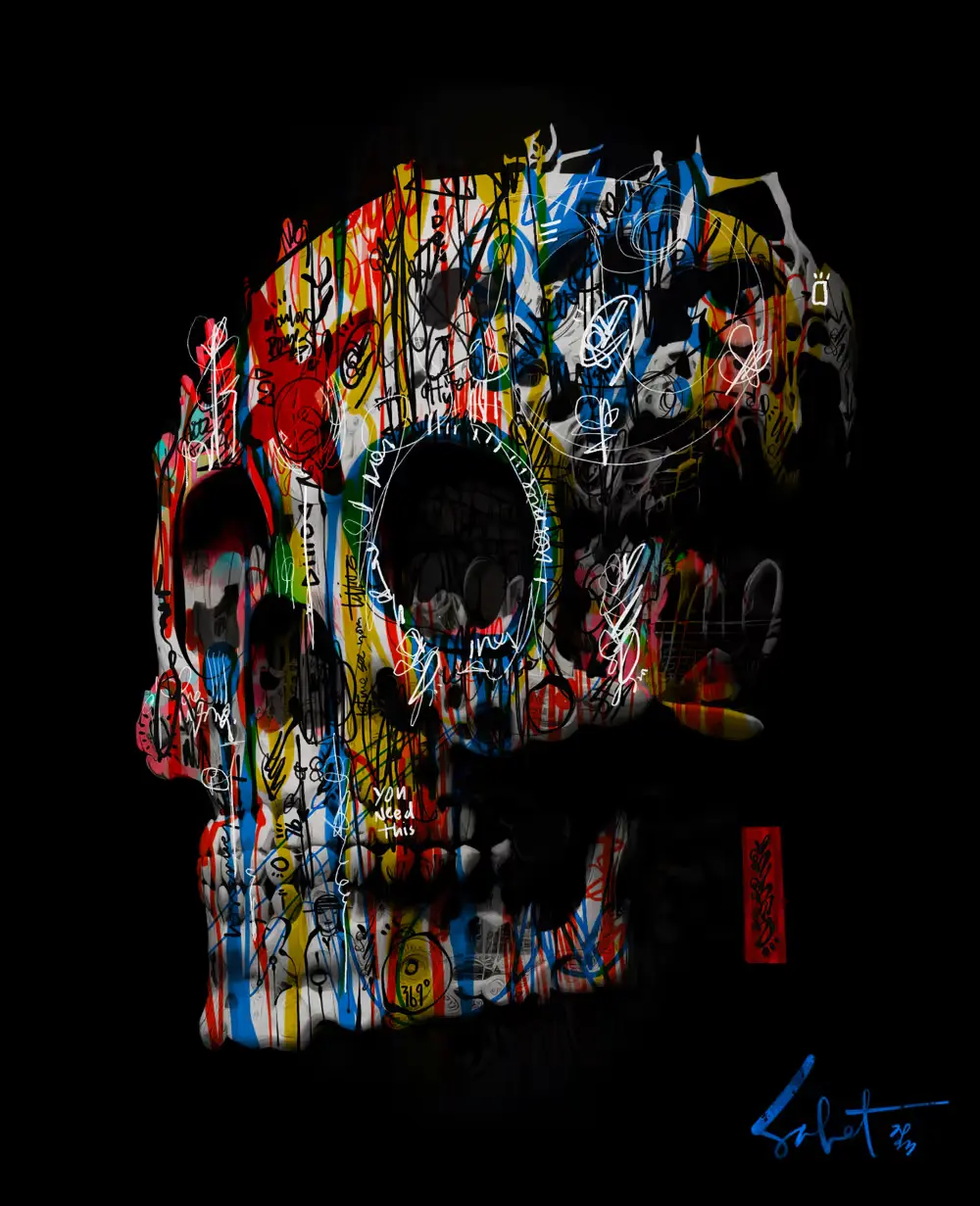
Our goal was to help artists earn predictable income by launching programs like these for their community. What Sabet had done with a set of available tools, we wanted to productivize that and give a unified experience both to the artist and their collectors.
There was one problem. We didn't have a customer.
After building in crypto for over 18 months, I decided to attend our first conference. We had a direction but we didn't know the next step. I was hoping to unlock that.
The Non-Fungible Conference was happening in less than a month in Lisbon and a lot of artists whom we admired or had some relationship with were planning to be there.

I've mixed feelings from the visit itself.
The event itself was breathtaking. It was hosted in the Pavilhão Carlos Lopes.
You had digital artworks displayed on massive screens and interesting panel discussions. People were hopping in and out of the main event and going through a lot of side events and parties.
A lot of them I couldn't make sense of. You had people going into these side events, having a good time, and getting out without a clue who sponsored the event and what they did.

I did get to meet a lot of artists. I just didn't think it was as impactful as I would have liked. Our goal was to close at least one artist willing to work with us.
I didn't have that.
I had had one conversation that had stood out . A Danish artist, CustomHorror had found our idea interesting. After returning back to India, we set up a call with him. It took a few weeks but he eventually agreed to work with us.

CustomHorror launched a 3 months program called Moments. Holders of the reMEMBER Pass would get access to 6 free editions plus an exclusive access to participate in 1/1 auctions. During a time when art sales had dried up pretty badly Custom was able to generate a total earning of around ~$4000.
That wasn't the only thing though I think in some ways it did help him bring his community together at a time when things were getting really tough in the crypto art space.
We spent incredible amount of time planning and executing the program. For that one whole month, the only goal we had was to ensure Custom succeeds with this program.
It seemed we had managed to make that happen.
We had assumed considering the outcome we would be able to onboard more artists quickly. I massively underestimated the effort that would go into convince artists and to launch a successful program.
We signed up a bunch of artists. But a lot of them dropped off mid way. Considering the market had been bad for a year now, the general sentiment was pessimistic and artists assumed that a program like this could only work for larger artists. Second, by design, these programs were high effort, high outcome. This meant artists preferred something that was simpler to experiment with.
We launched only 3 more programs over the next 8 months.

In early 2024, two things happened. Farcaster started growing rapidly. Around the same time, Base, a Layer-2 chain launched by Coinbase began gaining traction.
To address the issues we’d seen in the earlier version, we made three changes:
Shortened the program duration to just two weeks
Moved the app to Base to reduce gas costs
Used Farcaster as the primary demand engine
Then things started to shift. It had taken us months to ship four programs. We were now launching 4 in a single week. That year, we went back to the Non-Fungible Conference. The response to the product was strong, but it stood in sharp contrast to the mood on the ground, which was bleak.
Many of the artists I’d met the year before didn’t show up.
The highlight of the trip was meeting Ev. He was the founder of 500px, an A16Z backed photography platform that, at its peak, was the default home for professional photographers. He had entered crypto a few years earlier and had built and scaled Sloika, an NFT marketplace focused on photography, to millions of dollars in volume.
His advice was blunt: the market was shrinking, and in his view, already dead.I had seen the same trend in the data on Dune.
However, I had this naive belief that Base could reverse the downtrend.

The high point was launching a program that was a collaboration between 4 artists across the world - Customhorror, Ava, Swrks, and Peter and curated by Edward who was previously the Community Lead at the OG Crypto Art Platform, Knownorigin (acquired by eBay). Over 100 people showed up to be part of this journey.
This actually helped me understand more deeply one of the super powers of crypto. Crypto excels in aggregating liquidity from all over the world.
We managed to grow volumes month on month for six straight months. Still, I could feel a reckoning coming. I had pivoted from Brew two years earlier in search of a larger market that still had life. Instead, I found myself in a small niche nested inside a shrinking corner of crypto.
In October,2024 I decided to wind down Tasseo. The team was down to four people, including me. My co-founder, Mehul, had moved on earlier that year.
We gave everyone time and space to find their next role. I met our lead investors soon after. Both were kind. One advised me to take a break. The other reminded me, gently, that the opportunity cost was very high.

I hate giving up. But sometimes choosing closure over persistence can open doors. at that point, I wasn't sure what I would do next. I just knew that I wanted to continue building in crypto.
I still have fond memories from our time building Tasseo. People paid their bills and rents. One artist took his family on a vacation to Japan. For a brief moment, we were able to help people pursue their passion.
I met Puneet through a close friend . It was fortuitous that he reached out when I was in tail end of my journey. He helped out with Tasseo towards the end. We both wanted to build in crypto and decided to team together in search of something meaningful to build.
In November, 2024 proxystudio and Jack Dishman launched Clanker on Farcaster.

Clanker is a token bot that enabled you to launch a token right from the farcaster social feed on Base. It was a very very interesting approach. Note that at that time Solana had pump.fun which was driving like a massive amount of trading volume.
The next few days were crazy with thousands of people going berserk launching tokens every day. Puneet and I for a moment forgot about our original quest to build something and jumped into the trenches trading clankers.
The amount of clankers that were getting launched made it difficult to identify ones that had potential.
This is when Puneet and I built Clanker Live along with generous help from another fren.

We shipped this with in 2 weeks of Clanker launching. A bunch of people started using this. Proxy himself dropped a DM and shared some encouraging words.
I don't think Proxy realized the significance of his words then, but at that point in time, and the state of mind I was in, it did feel nice to be seen.
In December, 2024 I flew to Delhi. Puneet and I met in person for the first time to sketch out our next steps. There was one insight we had run into. While Solana had advanced trading terminals like Photon, BullX, and later Axiom Trade, Base being a new ecosystem still didn't have any power tools for trading.
We decided to build the Photon for Base.
Photon is a Solana-native trading terminal built for speed, with real-time charts, swaps, and wallet tracking in one interface. It also offers power features like limit orders, stop-losses, and advanced execution tools for active traders.
We also did an exercise where we reached out to around 100+ folks on farcaster to get their inputs on how they trade. Quite a few of them replied. We published our learnings here: https://paragraph.com/@rch/how-farcaster-trades

This was an detour I took to learn React.
Also, this was the only app that I built completely on my own in 2025. I had last written production code almost 10 years back. In January of 2025, I picked up a course on React and completed it. I wanted to practise my new-found skills coupled with the super-power you got from new age AI tools like cursor.
Reconnect was a farcaster mini app that showed you frens you had lost touch with. On frontend, I used React + Vite and on backend I just wrote a dune query. It was very slow, had one active user, me. But it was incredibly fun to build.
Dune is a crypto analytics platform that lets anyone query on-chain data with SQL and turn it into public, shareable dashboards.
While I was honing my frontend skills, Puneet was building out a solid backend for the trading terminal we had in mind. We didn’t want to ship something with no user feedback. So we chose to launch a simple mini app first to get attention and build a waitlist.
Clanker Ranker showed the Clanker Tokens that you were top holders of and generated a (badly designed) banner to stan your holdings.

I think we got like 10 people who signed up, 2 of them were Puneet and I.
3 months into 2025, Baseedge was slowly coming together. We had a tool that we were using internally to run our own trades. We could set exit rules such as stop loss, laddered profits, and trailing stop loss (something senpi calls dynamic stop loss). Moreover, we had built a simulation environment where we could write python script to simulate how these rules would have worked over a test date range.
But we were still far from launching a user facing product.
In search of user feedback, we launched a web app that showed users the amount of additional money they could have made or saved, had they had an automated trading strategy in place.

I found it incredibly interesting. No one else did.
It sucked. I thought that I had done a bad job in distribution and coded a farcaster mini app just to see if that would get us more eyeballs. It didn't.
There was one thing that had stood out though. I don't recall who and where but someone remarked how they didn't know that they had made a bag on a token months back. They didn't talk about how much they could have saved or could have made more.
I think I had enjoyed the feeling ot building just for the sake of building. But we were approaching the second half of 2025. We both wanted something more.
So, we took the one thing that showed any sign of working and turned that into a mini app. It did just one thing. It showed you your top win and biggest L.

Puneet shared the app with Ted and Saxena Saheb. Both were kind enough to share it on farcaster. And then something weird enough. The mini app with an unimaginative name kind of went a little viral.
People looked at their best wins with nostalgia and their biggest Ls with kind of amusement. The App broken into top 50 mini apps leaderboard on farcaster for a day or so. At its peak, there was someone sharing their stats every 30 seconds.
The hype stayed for 2 days and then like most shiny things in crypto it died.
Virality is critical for consumer apps. We had moments of virality, but nothing truly goes viral unless the k-factor is above 1. Another learning was that virality doesn’t compound without a critical mass of users. That likely explains why this app got some attention, unlike our earlier mini apps.
The previous app gave users little reason to come back. It had a one-time novelty, but no sustainable pull. Once again, we looked to users for the next step.
We had built a leaderboard as a small add-on feature. A surprising number of users called it out. Sometime back, Farcaster itself had launched its native weekly leaderboard, ranking users by engagement and paying top performers in USDC. I found myself checking it multiple times a day. There were users who were sharing screenshots of their ranks. The behavior was obvious.

We set out to build a weekly leaderboard for traders holding and trading tokens launched via the Clanker launchpad. Rankings were based on weekly PnL%, weighted by trade size and holdings. We normalized the impact so that a $1,000 profit didn’t automatically score 10× more points than a $100 profit. We wanted to reward people for their skills and not necessarily size.

We also put in more work in planning the launch of the app. We took inputs on the product from the Clanker team and a bunch of frens from Farcaster.
The first version was very simple. People could check their rank, their streak on the app, and share their rank. Plus there was a leaderboard showing a global rank for the week. A highpoint of this part of the journey was finishing a week among the top 100 mini apps on the Farcaster Dev Leaderboard. I had spent a year reviewing and using mini apps in the top 100. This was the first time we had built something that landed in top 100.
The whole app was built on a hypothesis that people would be interested in tracking their trading rank on a weekly basis.
It worked for a while.

Some things expand your abilities. They quietly make you more powerful. That’s utility. Other things expand your ego. They give you a kick. That’s vanity.
The first version of Clankline over indexed on the vanity axis. People would look at their ranks and share their ranks. But there wasn't much to do beyond that.
We started adding more utilitarian features to the app. We started showing folks their Clanker Portfolio i.e. the list of Clanker launched tokens they held and their PnL position on them. We showed folks trending Clanker tokens which was in a way a relaunch of the Clanker Live functionality just with a better UI and more insights. We had shipped a leaderboard and now we were shipping tools to help people ace that leaderboard.

At some point we added the feature where people could buy and sell using the mini app sdk swap feature. I was curious how many people would transact based on the information we were showing them.
In 2 weeks we got 3 transactions.

When we launched The Clankline, we had set a goal of 1000 DAUs and 100 Transacting Users with in 2 weeks of launch. We were two months in without the goal in the sight.
Our DAU had stabilized between 50-100 people with hardly any transacting users.
We were going with the motions, keeping the product alive, making some incremental changes but we were stuck.
I should give credit where credit is due. It was Puneet's idea to try something new. We built a simple voting app that simulated a Prediction Market. Users could come in and vote YES or NO on a token hitting a certain MCAP by a certain time. People who got it right won additional points that helped them rank higher on the leaderboard.
Will Bracky's Marketcap be higher than $16 Million at Sep 3, 3:00 PM UTC?
102 people voted in 24 hours. After the initial launch hype, this was the first time we had seen this level of active engagement in the app. Just to be sure that this was not an one off incident, we launched another market. 65 people showed up.
We had something.
I keep coming back to the one decision that set everything in motion. The immediate catalyst was the growing chatter around prediction markets in crypto. It may have looked serendipitous from the outside, but it wasn’t accidental. It was reinforced by the time Puneet and I had already spent building and using these systems. I had been an early user of Polymarket. Puneet had been deep in the Solana trenches. Between us were hours of debates on price trends, tokens, and emerging metas trying to speculate about how the future will play out.
I think by now you would have spotted the pattern that we followed in 2025 - taking the one thing that showed any sign of working and iterating on it.
We started working on an onchain prediction market. We read up on early attempts on prediction markets and a few papers. Puneet wrote a simple simulator so that we could test things out before writing the contract.
We launched the first market on Oct 8. It was a price prediction market for an app coins, BITQUIZ, that Ev was launching. Puneet and I had set a goal of 100 participants. We had decided if 100 people showed up then we probably have something. If not, then we need to step back and rethink our lives.
We didn't get to 100. We did get to 49 though.
It was enough to keep going.
Last 2 months have felt like a whirlwind. The chart below illustrates our frantic effort to keep up with the growth we're seeing. There is a powerful sentence in the iconic essay "The only thing that matters" by Marc Andreessen - "In a great market—a market with lots of real potential customers—the market pulls product out of the startup."
Puneet and I can feel the pull.


A lot has transpired in these last few weeks. We have had some of the best minds in crypto launch markets with us. Base India sponsored us for a a founder's house which was an interesting experience. We got a grant from the Base Global Ecosystem out of blue.
The Mini App itself has consistently ranked among the top apps in the Farcaster Ecosystem. (there are over 6K mini apps today) The best part however has been the user love.

In all the apps we built earlier, we would ship things and people would hardly notice. This one even before we made a product announcement people would notice things and give a public shoutout.
It goes the other way round too.
We're still a small team - Puneet, me, and Harshada recently joined to help with product comms. A lot of things in the product are still manual.

I remember there was like a week where we were really busy between product dev and some other stuffs in motion and I missed sending out notifications and making an announcement one the market resolves.
A user called us out on that. We haven't missed making a market closure announcement since then and we intend to keep it that way.
It is still hard. Every day we have a much larger list of things that we need to do than the time we have. But it is much much better than being in a place of indifference where no one really cares about what you are building.
Sometimes you know things, but you only truly understand them after living through the pain. My biggest learning from this year of building, especially when I contrast it with the three years before, is the importance of reducing cycle time. The faster you move and learn, the faster you get to something genuinely valuable. If I had internalized this one lesson earlier, I would have saved myself years.

It took us sometime to really understand what we have and what it can become.
We believe that the best prediction markets don't exist today. Incumbents, Polymarket and Kalshi take a top down approach of deciding what matters and which markets should exist. We want to flip that and give that control to the people.
Today, we (almost) have a product that lets any crypto analyst to turn their alpha calls into price-prediction markets.
Soon, we will empower any creator to turn their takes into markets.
What excites me most though is once we have build out what we have envisioned, we would have given every human on internet a personal oracle to look into the future.
The future is already here — it's just not evenly distributed

I discovered crypto in 2017. But for the most part, I stayed on the sidelines watching passively as the space evolved. It wasn’t until the summer of 2021 that I really looked.
I still remember the feeling. It felt magical then; setting up a self-custody wallet, swapping on Uniswap, depositing ETH into Aave and taking out a loan, minting my first NFT on Rarible and paying $200 in gas. I found two ideas specifically incredibly powerful; the freedom to build on an open, permission-less network and the fact you held sovereignty over your assets .
Later that year, I quit my job and raised a seed round to start building in crypto full-time. I had spent endless hours and nights diving deep into trenches and had this thesis that DeFi was going to change the world. But we need to simplify the UX to make it usable for normal people.
Today, I think crypto adoption isn’t blocked by UX alone.. It is lack of useful products. We keep comparing current state of crypto with early days of Internet. But we miss an important detail. Even when the internet was slow and clunky, it was still growing fast because it was obviously useful.
The first product we built was Brew Money - a simple app that helped you earn yield on your crypto through DeFi.
This was peak bull market. Bitcoin had hit new highs. Millions of people across the world parked billions of dollars worth crypto in centralized platforms like BlockFi, Celsius, and more to earn yield.
These platforms were opaque. The yields were attractive, but the users were not aware of the risks involved. Our belief was that DeFi offered a safer, more transparent alternative. *
We were directionally right, but not entirely. Billions are lost to DeFi hacks and exploits. The difference is the risks are visible and onchain.

We launched the Private Beta in Feb, 2022. We had built an iOS app that was dead simple to use. A user could in matter of taps move funds from their bank account into an Aave USDC pool and start earning yield. And we did all of this while keeping the app non-custodial.
The big challenge was onboarding. Fiat-to-crypto remains one of the hardest parts of the stack. We spent the next few months improving the onramp experience with our partner, adding more protocols onto the app, and ironing out early product quirks. We also built something really cool where people could move their funds between protocols in a matter of taps.
May, 2022: Tera Luna happened.
US Terra was an algorithmic stable coin that maintained its peg backed by the LUNA token . At its peak, the market cap of LUNA and UST was $40 Billion. It all crashed to 0 in a span of 3 days.
At that point we had a small number of users testing the app on a Beta Testflight Version and few thousands on the waitlist. We were working towards launching the app on App Store. But the world had changed. I just did not realize it back then.
I was looking back at the deck I was using to raise a round then. I had a slide on the competitive landscape with around 8 competitors. 6 of them don't exist any more. 1 has pivoted and still trying to find PMF. 1 survived but has shifted focus towards serving institutions. (which I think was a very smart move)
The next few months were brutal. A series of CeFi platforms including BlockFi and Celsius filed for bankruptcy. Growth stalled. We were having a hard time converting people even on our waitlist.
Then November came. FTX collapsed. What was supposed to be one of the shining stars of the cycle filed for bankruptcy.
I ignored what was happening in the market and we kept grinding.
In December, we launched publicly on Product Hunt. We did everything “right.” The app was pixel-perfect. The tagline "Earn with self-custody" felt earned.
Brew finished #3 Product of the Day. It felt good.

However, we added single-digit new users.
It was clear that what we had was not working or the market for it didn't exist anymore.
I believed a well-crafted product would find its users. Our underlying thesis about the risks Ce-Fi entailed had come true. What I hadn't internalized though was markets don't care about your craft and beliefs during a macro shift.
December 2022 was a dark. ChatGPT had just launched, and many crypto builders I knew pivoted to AI. Some did well too.
We had a bunch of ideas, but they were vague and we didn’t have a clear next step. A CRM for DeFi protocols. A Uniswap for staked assets. A full-fledged EVM wallet, because we hated every wallet back then. Some of them were good ideas, but I couldn’t build conviction. The common thread was a decision to focus only on crypto natives. With the bear market setting in, it felt like only the believers would remain.
This wasn't wrong. What I underestimated though was how much we still had to learn. Brew had been built for a crypto-adjacent audience, and by going deeper into crypto native users, we were stepping into an entirely new world.
I was going through my monthly updates and this was the note I sent across on Dec, 2022.
We think a product like Brew that helps users earn yield on their crypto with self custody is something that is going to be difficult to grow in current market conditions. We remain bullish on crypto overall. Uniswap is still seeing 130K new traders every month, Lido is growing 10% month on month and will probably grow even faster once the Shanghai upgrade goes live in March, and about 300K consumers still buy NFTs on Opensea every month.
Even in the midst of what felt like a start of a long crypto winter, I was intrigued by what the dune dashboard for Opensea showed me. While trying to find out a space that still had significant user activity, I chose NFTs, probably right at the top.
Opensea was the go to NFT marketplace, Twitter had launched NFT Profile pics (the cool pentagon container), and Instagram allowed NFT posts back then. The thing that felt a bit weird was for a visual artwork, the primary mode of discovery was crypto twitter.
Our hypothesis was that a visually native social platform could become the discovery layer for NFTs. I had just joined Farcaster then. I shared a Figma prototype, dwr recasted it, and the responses felt encouraging.

This was February 9, 2023. Two weeks later we shipped an MVP as an iOS App on Testflight. I enthusiastically casted about it. I got zero response.
Nobody installed the app. Nobody replied. Nobody even liked the cast.

At this point, farcaster was a tiny tiny network. It was just a bunch of people who hanged out together online and dwr was still manually onboarding users.
It was a little perplexing considering the enthusiasm we had received two weeks earlier. I took it as a sign that this was one of those things that people say they want when in reality it is an optional vitamin supplement for their life. Also looking back today, I feel it is entirely possible that most people took me for a sketchy crypto hacker out to steal their private keys. (I was a new user with few frens)
Somewhere between mid-Feb and end of Match, we stumbled upon an interesting little corner of Crypto - the crypto art space. NFTs had for the first time enabled digital visual artists to monetize their creations.

An excerpt from a memo I wrote back then on Crypto Art and Open Editions.
The State of NFT Market
The NFT market cap is estimated at $11-15B, with Crypto Art accounting for 10%. Although not fully representative, Opensea and Blur's secondary sales show signs of recovery with weekly trading volumes at $750M, 50% of its peak in 2022. Amidst the slowdown though, a new phenomenon of Open , Timed , and Limited Edition NFTs have seen explosive growth in the last 6 months.Manifold, a no code tool that allows creators to release open edition drops has seen a growth of 200% to 300% month over month. ~5K artists used Manifold to launch editions in January up from ~2900 in December. (February has been a flat month though) e.g. You can see a timed edition by Amber Vittoria here. She made close to $150K last year from different kinds of editions.
Editions enable collectors to get exposure to artist’s work at a lower price point. The tradeoff artists make is that editions typically will have lower price appreciation. In return they get access to a larger collector base, some of whom can level up to higher price points 1/1 in the future.
Mehul wrote a series of scripts and Dune queries to generate detailed reports for artists. They took hours to put together and we DMed them to artists we believed would find them useful.

I made a classic mistake highlighted in the book The Mom Test: I confused polite encouragement with real demand for something people actually want.

The next month, we again generated a bunch of reports and shared them across. We would get public shoutouts, rave reviews on these reports, people were seeing insights and learning things about their work and collectors they had never known. But there was no inclination to pay.
One thing was clear to us. Just showing insights were not enough. We needed to offer something that could have a tangible impact in their lives.
We got the idea of a web3 patreon from a program that Sabet had run. He launched a economically priced open edition called X-Ray. Holders would get to mint a free artwork every month for the next 12 months. Over 800 people minted XRay & in under 3 months, it has already generated a secondary volume of 22 ETH.

Our goal was to help artists earn predictable income by launching programs like these for their community. What Sabet had done with a set of available tools, we wanted to productivize that and give a unified experience both to the artist and their collectors.
There was one problem. We didn't have a customer.
After building in crypto for over 18 months, I decided to attend our first conference. We had a direction but we didn't know the next step. I was hoping to unlock that.
The Non-Fungible Conference was happening in less than a month in Lisbon and a lot of artists whom we admired or had some relationship with were planning to be there.

I've mixed feelings from the visit itself.
The event itself was breathtaking. It was hosted in the Pavilhão Carlos Lopes.
You had digital artworks displayed on massive screens and interesting panel discussions. People were hopping in and out of the main event and going through a lot of side events and parties.
A lot of them I couldn't make sense of. You had people going into these side events, having a good time, and getting out without a clue who sponsored the event and what they did.

I did get to meet a lot of artists. I just didn't think it was as impactful as I would have liked. Our goal was to close at least one artist willing to work with us.
I didn't have that.
I had had one conversation that had stood out . A Danish artist, CustomHorror had found our idea interesting. After returning back to India, we set up a call with him. It took a few weeks but he eventually agreed to work with us.

CustomHorror launched a 3 months program called Moments. Holders of the reMEMBER Pass would get access to 6 free editions plus an exclusive access to participate in 1/1 auctions. During a time when art sales had dried up pretty badly Custom was able to generate a total earning of around ~$4000.
That wasn't the only thing though I think in some ways it did help him bring his community together at a time when things were getting really tough in the crypto art space.
We spent incredible amount of time planning and executing the program. For that one whole month, the only goal we had was to ensure Custom succeeds with this program.
It seemed we had managed to make that happen.
We had assumed considering the outcome we would be able to onboard more artists quickly. I massively underestimated the effort that would go into convince artists and to launch a successful program.
We signed up a bunch of artists. But a lot of them dropped off mid way. Considering the market had been bad for a year now, the general sentiment was pessimistic and artists assumed that a program like this could only work for larger artists. Second, by design, these programs were high effort, high outcome. This meant artists preferred something that was simpler to experiment with.
We launched only 3 more programs over the next 8 months.

In early 2024, two things happened. Farcaster started growing rapidly. Around the same time, Base, a Layer-2 chain launched by Coinbase began gaining traction.
To address the issues we’d seen in the earlier version, we made three changes:
Shortened the program duration to just two weeks
Moved the app to Base to reduce gas costs
Used Farcaster as the primary demand engine
Then things started to shift. It had taken us months to ship four programs. We were now launching 4 in a single week. That year, we went back to the Non-Fungible Conference. The response to the product was strong, but it stood in sharp contrast to the mood on the ground, which was bleak.
Many of the artists I’d met the year before didn’t show up.
The highlight of the trip was meeting Ev. He was the founder of 500px, an A16Z backed photography platform that, at its peak, was the default home for professional photographers. He had entered crypto a few years earlier and had built and scaled Sloika, an NFT marketplace focused on photography, to millions of dollars in volume.
His advice was blunt: the market was shrinking, and in his view, already dead.I had seen the same trend in the data on Dune.
However, I had this naive belief that Base could reverse the downtrend.

The high point was launching a program that was a collaboration between 4 artists across the world - Customhorror, Ava, Swrks, and Peter and curated by Edward who was previously the Community Lead at the OG Crypto Art Platform, Knownorigin (acquired by eBay). Over 100 people showed up to be part of this journey.
This actually helped me understand more deeply one of the super powers of crypto. Crypto excels in aggregating liquidity from all over the world.
We managed to grow volumes month on month for six straight months. Still, I could feel a reckoning coming. I had pivoted from Brew two years earlier in search of a larger market that still had life. Instead, I found myself in a small niche nested inside a shrinking corner of crypto.
In October,2024 I decided to wind down Tasseo. The team was down to four people, including me. My co-founder, Mehul, had moved on earlier that year.
We gave everyone time and space to find their next role. I met our lead investors soon after. Both were kind. One advised me to take a break. The other reminded me, gently, that the opportunity cost was very high.

I hate giving up. But sometimes choosing closure over persistence can open doors. at that point, I wasn't sure what I would do next. I just knew that I wanted to continue building in crypto.
I still have fond memories from our time building Tasseo. People paid their bills and rents. One artist took his family on a vacation to Japan. For a brief moment, we were able to help people pursue their passion.
I met Puneet through a close friend . It was fortuitous that he reached out when I was in tail end of my journey. He helped out with Tasseo towards the end. We both wanted to build in crypto and decided to team together in search of something meaningful to build.
In November, 2024 proxystudio and Jack Dishman launched Clanker on Farcaster.

Clanker is a token bot that enabled you to launch a token right from the farcaster social feed on Base. It was a very very interesting approach. Note that at that time Solana had pump.fun which was driving like a massive amount of trading volume.
The next few days were crazy with thousands of people going berserk launching tokens every day. Puneet and I for a moment forgot about our original quest to build something and jumped into the trenches trading clankers.
The amount of clankers that were getting launched made it difficult to identify ones that had potential.
This is when Puneet and I built Clanker Live along with generous help from another fren.

We shipped this with in 2 weeks of Clanker launching. A bunch of people started using this. Proxy himself dropped a DM and shared some encouraging words.
I don't think Proxy realized the significance of his words then, but at that point in time, and the state of mind I was in, it did feel nice to be seen.
In December, 2024 I flew to Delhi. Puneet and I met in person for the first time to sketch out our next steps. There was one insight we had run into. While Solana had advanced trading terminals like Photon, BullX, and later Axiom Trade, Base being a new ecosystem still didn't have any power tools for trading.
We decided to build the Photon for Base.
Photon is a Solana-native trading terminal built for speed, with real-time charts, swaps, and wallet tracking in one interface. It also offers power features like limit orders, stop-losses, and advanced execution tools for active traders.
We also did an exercise where we reached out to around 100+ folks on farcaster to get their inputs on how they trade. Quite a few of them replied. We published our learnings here: https://paragraph.com/@rch/how-farcaster-trades

This was an detour I took to learn React.
Also, this was the only app that I built completely on my own in 2025. I had last written production code almost 10 years back. In January of 2025, I picked up a course on React and completed it. I wanted to practise my new-found skills coupled with the super-power you got from new age AI tools like cursor.
Reconnect was a farcaster mini app that showed you frens you had lost touch with. On frontend, I used React + Vite and on backend I just wrote a dune query. It was very slow, had one active user, me. But it was incredibly fun to build.
Dune is a crypto analytics platform that lets anyone query on-chain data with SQL and turn it into public, shareable dashboards.
While I was honing my frontend skills, Puneet was building out a solid backend for the trading terminal we had in mind. We didn’t want to ship something with no user feedback. So we chose to launch a simple mini app first to get attention and build a waitlist.
Clanker Ranker showed the Clanker Tokens that you were top holders of and generated a (badly designed) banner to stan your holdings.

I think we got like 10 people who signed up, 2 of them were Puneet and I.
3 months into 2025, Baseedge was slowly coming together. We had a tool that we were using internally to run our own trades. We could set exit rules such as stop loss, laddered profits, and trailing stop loss (something senpi calls dynamic stop loss). Moreover, we had built a simulation environment where we could write python script to simulate how these rules would have worked over a test date range.
But we were still far from launching a user facing product.
In search of user feedback, we launched a web app that showed users the amount of additional money they could have made or saved, had they had an automated trading strategy in place.

I found it incredibly interesting. No one else did.
It sucked. I thought that I had done a bad job in distribution and coded a farcaster mini app just to see if that would get us more eyeballs. It didn't.
There was one thing that had stood out though. I don't recall who and where but someone remarked how they didn't know that they had made a bag on a token months back. They didn't talk about how much they could have saved or could have made more.
I think I had enjoyed the feeling ot building just for the sake of building. But we were approaching the second half of 2025. We both wanted something more.
So, we took the one thing that showed any sign of working and turned that into a mini app. It did just one thing. It showed you your top win and biggest L.

Puneet shared the app with Ted and Saxena Saheb. Both were kind enough to share it on farcaster. And then something weird enough. The mini app with an unimaginative name kind of went a little viral.
People looked at their best wins with nostalgia and their biggest Ls with kind of amusement. The App broken into top 50 mini apps leaderboard on farcaster for a day or so. At its peak, there was someone sharing their stats every 30 seconds.
The hype stayed for 2 days and then like most shiny things in crypto it died.
Virality is critical for consumer apps. We had moments of virality, but nothing truly goes viral unless the k-factor is above 1. Another learning was that virality doesn’t compound without a critical mass of users. That likely explains why this app got some attention, unlike our earlier mini apps.
The previous app gave users little reason to come back. It had a one-time novelty, but no sustainable pull. Once again, we looked to users for the next step.
We had built a leaderboard as a small add-on feature. A surprising number of users called it out. Sometime back, Farcaster itself had launched its native weekly leaderboard, ranking users by engagement and paying top performers in USDC. I found myself checking it multiple times a day. There were users who were sharing screenshots of their ranks. The behavior was obvious.

We set out to build a weekly leaderboard for traders holding and trading tokens launched via the Clanker launchpad. Rankings were based on weekly PnL%, weighted by trade size and holdings. We normalized the impact so that a $1,000 profit didn’t automatically score 10× more points than a $100 profit. We wanted to reward people for their skills and not necessarily size.

We also put in more work in planning the launch of the app. We took inputs on the product from the Clanker team and a bunch of frens from Farcaster.
The first version was very simple. People could check their rank, their streak on the app, and share their rank. Plus there was a leaderboard showing a global rank for the week. A highpoint of this part of the journey was finishing a week among the top 100 mini apps on the Farcaster Dev Leaderboard. I had spent a year reviewing and using mini apps in the top 100. This was the first time we had built something that landed in top 100.
The whole app was built on a hypothesis that people would be interested in tracking their trading rank on a weekly basis.
It worked for a while.

Some things expand your abilities. They quietly make you more powerful. That’s utility. Other things expand your ego. They give you a kick. That’s vanity.
The first version of Clankline over indexed on the vanity axis. People would look at their ranks and share their ranks. But there wasn't much to do beyond that.
We started adding more utilitarian features to the app. We started showing folks their Clanker Portfolio i.e. the list of Clanker launched tokens they held and their PnL position on them. We showed folks trending Clanker tokens which was in a way a relaunch of the Clanker Live functionality just with a better UI and more insights. We had shipped a leaderboard and now we were shipping tools to help people ace that leaderboard.

At some point we added the feature where people could buy and sell using the mini app sdk swap feature. I was curious how many people would transact based on the information we were showing them.
In 2 weeks we got 3 transactions.

When we launched The Clankline, we had set a goal of 1000 DAUs and 100 Transacting Users with in 2 weeks of launch. We were two months in without the goal in the sight.
Our DAU had stabilized between 50-100 people with hardly any transacting users.
We were going with the motions, keeping the product alive, making some incremental changes but we were stuck.
I should give credit where credit is due. It was Puneet's idea to try something new. We built a simple voting app that simulated a Prediction Market. Users could come in and vote YES or NO on a token hitting a certain MCAP by a certain time. People who got it right won additional points that helped them rank higher on the leaderboard.
Will Bracky's Marketcap be higher than $16 Million at Sep 3, 3:00 PM UTC?
102 people voted in 24 hours. After the initial launch hype, this was the first time we had seen this level of active engagement in the app. Just to be sure that this was not an one off incident, we launched another market. 65 people showed up.
We had something.
I keep coming back to the one decision that set everything in motion. The immediate catalyst was the growing chatter around prediction markets in crypto. It may have looked serendipitous from the outside, but it wasn’t accidental. It was reinforced by the time Puneet and I had already spent building and using these systems. I had been an early user of Polymarket. Puneet had been deep in the Solana trenches. Between us were hours of debates on price trends, tokens, and emerging metas trying to speculate about how the future will play out.
I think by now you would have spotted the pattern that we followed in 2025 - taking the one thing that showed any sign of working and iterating on it.
We started working on an onchain prediction market. We read up on early attempts on prediction markets and a few papers. Puneet wrote a simple simulator so that we could test things out before writing the contract.
We launched the first market on Oct 8. It was a price prediction market for an app coins, BITQUIZ, that Ev was launching. Puneet and I had set a goal of 100 participants. We had decided if 100 people showed up then we probably have something. If not, then we need to step back and rethink our lives.
We didn't get to 100. We did get to 49 though.
It was enough to keep going.
Last 2 months have felt like a whirlwind. The chart below illustrates our frantic effort to keep up with the growth we're seeing. There is a powerful sentence in the iconic essay "The only thing that matters" by Marc Andreessen - "In a great market—a market with lots of real potential customers—the market pulls product out of the startup."
Puneet and I can feel the pull.


A lot has transpired in these last few weeks. We have had some of the best minds in crypto launch markets with us. Base India sponsored us for a a founder's house which was an interesting experience. We got a grant from the Base Global Ecosystem out of blue.
The Mini App itself has consistently ranked among the top apps in the Farcaster Ecosystem. (there are over 6K mini apps today) The best part however has been the user love.

In all the apps we built earlier, we would ship things and people would hardly notice. This one even before we made a product announcement people would notice things and give a public shoutout.
It goes the other way round too.
We're still a small team - Puneet, me, and Harshada recently joined to help with product comms. A lot of things in the product are still manual.

I remember there was like a week where we were really busy between product dev and some other stuffs in motion and I missed sending out notifications and making an announcement one the market resolves.
A user called us out on that. We haven't missed making a market closure announcement since then and we intend to keep it that way.
It is still hard. Every day we have a much larger list of things that we need to do than the time we have. But it is much much better than being in a place of indifference where no one really cares about what you are building.
Sometimes you know things, but you only truly understand them after living through the pain. My biggest learning from this year of building, especially when I contrast it with the three years before, is the importance of reducing cycle time. The faster you move and learn, the faster you get to something genuinely valuable. If I had internalized this one lesson earlier, I would have saved myself years.

It took us sometime to really understand what we have and what it can become.
We believe that the best prediction markets don't exist today. Incumbents, Polymarket and Kalshi take a top down approach of deciding what matters and which markets should exist. We want to flip that and give that control to the people.
Today, we (almost) have a product that lets any crypto analyst to turn their alpha calls into price-prediction markets.
Soon, we will empower any creator to turn their takes into markets.
What excites me most though is once we have build out what we have envisioned, we would have given every human on internet a personal oracle to look into the future.
<100 subscribers
<100 subscribers
Share Dialog
Share Dialog
that was a good read. i like the honest ups and downs, and mentioning of the mom test. excited to follow along.
Year end is a good time to reflect. I believe 2026 is going to be a start of a new chapter in my life. But to do that you have to put the past behind. I've spent the last 4 years of my life building in crypto. This is my story. If you have to take one thing out of it, it would be this "Sometimes you know things, but you only truly understand them after living through the pain. My biggest learning from this year of building, especially when I contrast it with the three years before, is the importance of reducing cycle time. The faster you move and learn, the faster you get to something genuinely valuable. If I had internalized this one lesson earlier, I would have saved myself years." https://paragraph.com/@rch/four-years-in-crypto
A journey of a thousand miles begins with a single step. I enjoyed reading this very long post! 88888 $oinc
Thank you Colin.
Happy New Year’s Eve to you, gf, puneet, and all! See you in 2026 (shortly)
Finishing the past. Making wiser progress✌️
rch surveys a decade in crypto, from self-custody and DeFi experiments to Brew, Tasseo, and Clanker. The post traces market shifts, NFT artistry, and a pivot toward Web3 tools and on-chain prediction markets, culminating in a vision of giving every user a personal oracle. @rch